
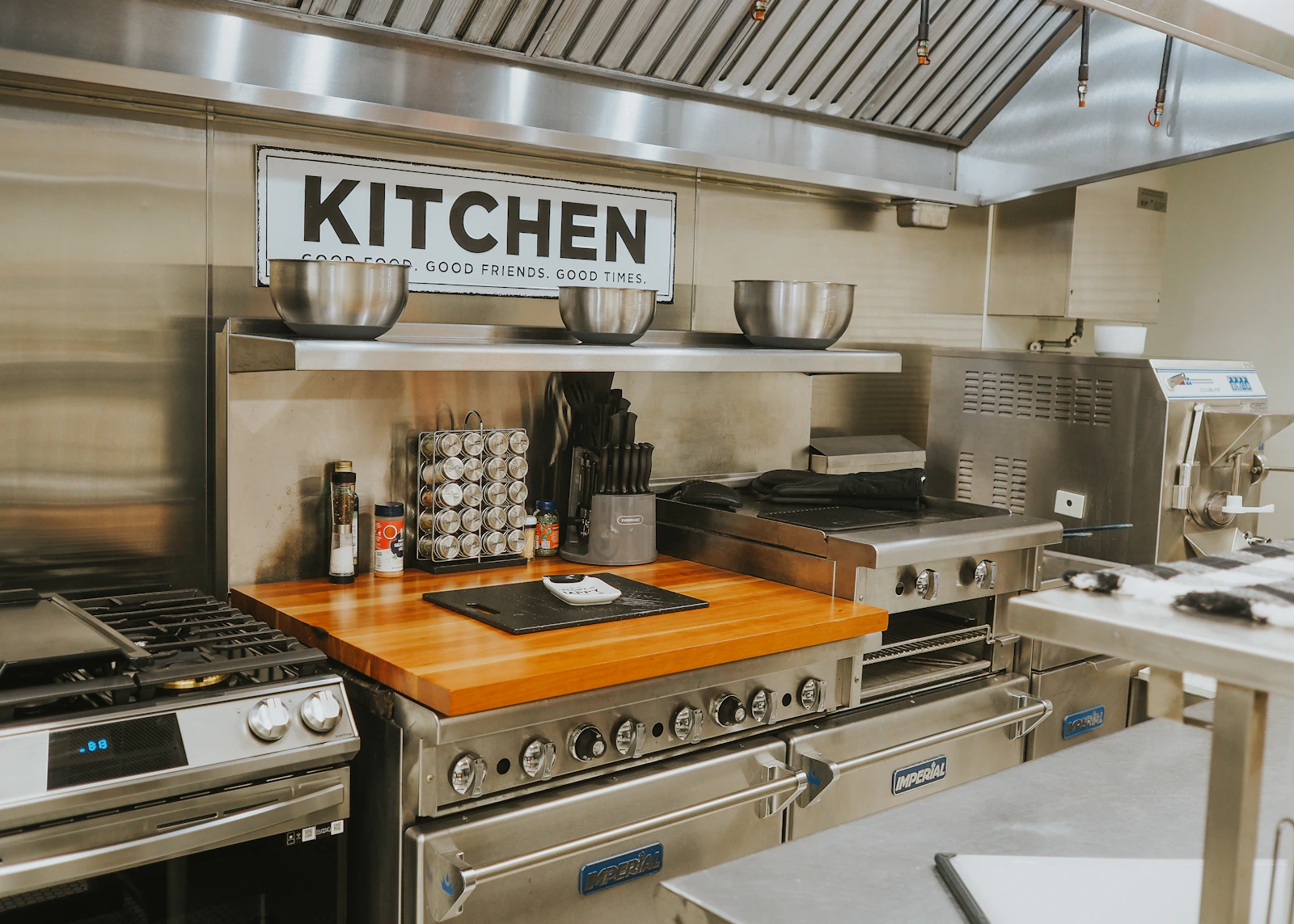
Why Restaurant Kitchen Coatings Are Redefining Philippine Food Service Design
The Philippine restaurant industry is undergoing a quiet revolution. As dining concepts modernize and food safety standards tighten post-2025, the surfaces behind the pass—the floors underfoot, the walls beside the wok stations, the prep surfaces enduring daily chemical cleandowns—are no longer an afterthought. Restaurant kitchen coatings have become a critical design and operational decision, one that affects everything from HACCP compliance to staff fatigue to the long-term maintenance costs of a commercial kitchen.
For architects, interior designers, and property developers specifying commercial food service environments across Metro Manila, Cebu, and the broader Philippine archipelago, the question is no longer whether to upgrade kitchen surfaces—it's which coating system delivers the performance, hygiene, and longevity that modern food service demands.
The answer, increasingly, lies in seamless coating systems that eliminate the grout lines, cracks, and porous surfaces where bacteria thrive and cleaning becomes a daily battle.
The Problem with Traditional Tile in Commercial Kitchens
Ceramic and porcelain tile has been the default specification for commercial kitchen floors and walls for decades—and for understandable reasons. It's familiar, it's available, and at face value it appears hygienic. But in the demanding environment of a high-volume restaurant kitchen, traditional tile systems reveal significant weaknesses.
Grout Lines: The Hygiene Liability
Every grout line in a kitchen floor or wall is a potential harbor for grease, moisture, mold, and bacterial biofilm. In a busy restaurant kitchen where spills are constant and steam is pervasive, grout degrades faster than in any other commercial environment. Regrouting is labor-intensive and requires kitchen downtime—a cost that compounds year over year.
Philippine food safety regulations increasingly align with international HACCP (Hazard Analysis and Critical Control Points) standards, which require surfaces in food preparation areas to be smooth, impervious, non-absorbent, and easily cleanable. A tiled floor with aging grout struggles to meet this benchmark.
Cracking Under Thermal Stress
Commercial kitchens experience extreme thermal cycling—from the heat of cooking equipment to cold water washdowns. Traditional tile and grout systems expand and contract at different rates, leading to cracking, delamination, and lippage over time. In a Philippine kitchen environment where ambient humidity is already high, water infiltrating through cracked grout causes substrate damage that is expensive to remediate.
Slip Resistance Degradation
The textured surfaces of kitchen floor tiles that provide initial slip resistance wear smooth under heavy foot traffic and repeated scrubbing with industrial cleaning chemicals. A surface that passed slip resistance testing at installation may present a genuine safety hazard within three to five years of operation.
Seamless Kitchen Surfaces: The Performance Case
Seamless coating systems address each of these failure modes by eliminating joints, reducing porosity, and bonding directly to the substrate as a continuous monolithic layer. For commercial food service environments in the Philippines, this translates to measurable operational advantages.
Continuous, Grout-Free Surfaces
A seamless coating applied to a kitchen floor creates an uninterrupted surface with no grout lines, no joints, and no edges for grease or bacteria to accumulate. Cleaning is faster, more effective, and more verifiable—critical when food safety inspectors visit or when a restaurant group is pursuing international certification.
Chemical and Moisture Resistance
Premium seamless coatings are formulated to resist the alkaline degreasers, acidic sanitizers, and disinfectants used in commercial kitchens—chemicals that can degrade inferior floor finishes over time. They are also inherently moisture-resistant when properly sealed, protecting the substrate from the constant wet conditions of a food service kitchen.
Thermal Stability
Unlike tile-and-grout systems, high-performance seamless coatings are engineered to accommodate the thermal movement of commercial kitchen environments without cracking or delaminating, maintaining their integrity through years of thermal cycling.
Microcement: The Premier Seamless Coating for Commercial Kitchen Floors and Walls
Among the seamless coating systems available for commercial food service environments, Microcement stands out as the specification of choice for kitchen floors, prep walls, and service corridors in Philippine restaurants and hotels. Its combination of aesthetic versatility, mechanical durability, and surface continuity makes it uniquely suited to the demands of a working kitchen.
TechStone's Microcement is a trowel-applied seamless coating available in Coarse and Fine textures, applicable to both floors and walls in indoor and outdoor environments. In a commercial kitchen context, it delivers a continuous, grout-free surface that satisfies the smooth and impervious surface requirements of food safety standards while offering a far superior aesthetic compared to institutional tile.
Microcement on Kitchen Floors
For flooring applications, Microcement's trowel-applied system bonds directly to concrete substrates, creating a monolithic surface that is both practical and visually refined. The Coarse texture variant is particularly well-suited to kitchen floor applications where slip resistance under wet conditions is a priority—providing tactile grip without the grout lines that compromise hygiene.
In a high-volume restaurant kitchen processing hundreds of covers per service, the durability of a properly installed and sealed Microcement floor is measured in decades, not years. Unlike tile, there are no individual units to crack, chip, or loosen underfoot—a meaningful operational advantage when a failed floor tile during service creates both a safety hazard and an immediate maintenance crisis.
Microcement on Kitchen Walls
Behind cooking stations, at splashback zones, and along food preparation corridors, wall surfaces in commercial kitchens face grease, steam, impact, and daily chemical cleaning. Microcement applied to kitchen walls creates a seamless, wipeable surface that resists staining and moisture penetration while maintaining its appearance under the harsh conditions of a professional kitchen environment.
For Philippine restaurant groups expanding into ghost kitchen formats or cloud kitchen facilities—where operational efficiency and hygiene compliance are paramount—seamless wall coatings like Microcement offer a compelling alternative to traditional tile that reduces both installation time and long-term maintenance burden.
Specifying for Front-of-House: Where Durability Meets Design
Modern restaurant design in the Philippines increasingly blurs the boundary between kitchen and dining space. Open kitchen concepts, chef's table formats, and semi-exposed preparation areas mean that the surfaces visible to guests must perform to kitchen standards while achieving dining room aesthetics.
Seamless Flooring Across the Threshold
One of the most powerful design moves available to a restaurant architect is the continuation of a single seamless floor material from back-of-house through to the dining floor—creating visual flow and spatial continuity that elevates the entire dining experience. A Microcement floor that runs from the open kitchen through to the dining room reads as intentional, sophisticated, and confidence-inspiring to the guest.
This continuity is simply not achievable with tile, where a transition strip or change of material is required at the kitchen threshold. With a seamless coating system applied across the entire floor plane, the restaurant communicates a level of design integrity that resonates with the discerning Philippine dining market.
Feature Walls in Exposed Kitchen Environments
For restaurant concepts where the kitchen or bar is a theatrical focal point—a common strategy in Metro Manila's competitive F&B landscape—the wall surfaces visible to guests must carry significant design weight. In these environments, specifying a wall coating with both visual impact and practical durability is essential.
Depending on the design language of the restaurant, different coating systems serve different aesthetic ambitions. For a refined, contemporary kitchen backdrop, Microcement walls offer a muted, textural quality that reads as premium without competing with the food presentation. For a more dramatic effect in a hotel restaurant or upscale dining concept, a polished finish wall coating can create the kind of luminous, reflective surface that elevates a dining room into a destination.
Hygiene Standards and Surface Compliance in Philippine Food Service
The Food and Drug Administration (FDA) of the Philippines, alongside the Bureau of Local Government Finance guidelines for food establishment permitting, sets clear expectations for the physical condition of surfaces in food preparation and handling areas. While specific material specifications vary by establishment classification, the underlying principle is consistent: surfaces must be non-porous, non-absorbent, smooth, and cleanable.
Seamless coating systems, when properly installed and sealed with food-safe topcoats, satisfy these requirements in ways that aging tile systems increasingly cannot. For restaurant operators seeking to maintain or achieve compliance with international standards—particularly hotel groups operating under global brand standards or restaurant chains pursuing ISO 22000 food safety certification—specifying seamless surfaces from the outset is the responsible professional decision.
Working with Specifiers on Compliant Surface Systems
For architects and designers working on restaurant and food service projects in the Philippines, the specification process for kitchen coatings should include a review of the intended cleaning protocols, the specific chemical agents used by the operator's facility management team, and the expected traffic intensity of the floor areas. These factors inform not only the choice of coating system but the selection of texture, sealer type, and application methodology.
TechStone's technical team works directly with specifiers on commercial food service projects to ensure that floor coating specifications are matched to the operational demands of the environment—a level of engagement that commodity tile suppliers rarely provide.
Long-Term Value: Maintenance, Lifecycle, and Total Cost of Ownership
The capital cost comparison between seamless coatings and premium tile is often cited as a barrier to specification—but this comparison rarely accounts for the full lifecycle cost of each system.
- Tile replacement and regrouting in a commercial kitchen environment typically occurs every five to eight years under heavy use, involving kitchen downtime, labor, and waste disposal costs.
- Seamless coatings, properly installed and maintained, can perform for fifteen to twenty years with periodic resealing—a significantly lower total cost of ownership when modeled across the full asset lifecycle.
- Cleaning time reduction in a seamless surface kitchen is measurable: without grout lines to scrub, daily cleaning protocols are faster and require less chemical consumption, contributing to both labor savings and sustainability credentials.
- Reduced downtime risk from surface failures is a genuine operational advantage in a high-revenue restaurant environment where every service closure has a direct financial cost.
For property developers and restaurant groups in the Philippines building for the long term—whether in a mall food court, a hotel all-day dining outlet, or a standalone flagship restaurant—the investment in premium seamless coating systems is readily justified by lifecycle economics, not just by design aspiration.
Conclusion: Specifying Smart for Philippine Restaurant Kitchens
The modernization of Philippine restaurant kitchens is not simply an aesthetic movement—it reflects a maturing industry that understands the operational, hygienic, and financial value of getting surfaces right the first time. As food safety standards rise, as labour costs increase, and as the competitive pressure on dining experiences intensifies, the surfaces of a commercial kitchen are revealed as a strategic investment rather than a commodity specification.
Seamless coating systems—and in particular, durable kitchen finishes like Microcement—offer Philippine restaurants, hotels, and food service operators a surface solution that outperforms traditional tile on every meaningful metric: hygiene compliance, chemical resistance, longevity, maintenance efficiency, and design continuity.
For specifiers and developers ready to explore seamless coating systems for their next food service project, TechStone's project portfolio demonstrates the breadth of commercial applications across the Philippine market. The right surface specification is not just a design decision—it's an operational one.